
Opinion
Don’t despair about aid cuts: a sustainable development model is emerging
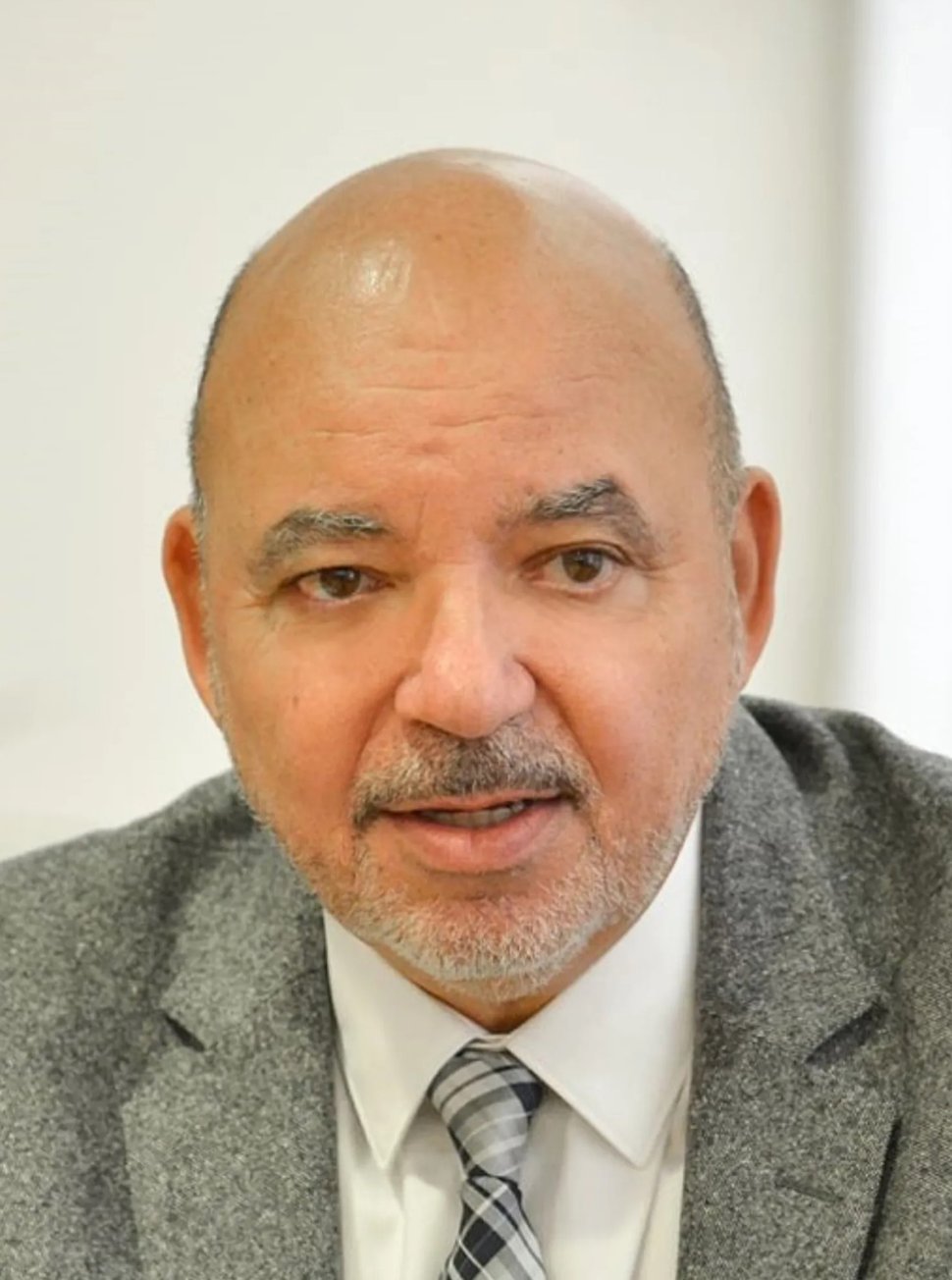
Alfred Hannig, CEO of the Alliance for Financial Inclusion (Photo: AFI)
The structure of international cooperation and solidarity has been under attack for quite some time. The latest massive and visible expression of critique towards aid came through on January 8, 2026, when the Trump administration announced that the United States was withdrawing from 66 international organizations characterized as catering to diversity and “woke” initiatives. This came on the heels of a press release announcing the United States’ USD 2 billion pledge for UN humanitarian aid, which warned that aid agencies “will need to adapt, shrink, or die.”
Not only in the United States, but across the entire developed world, countries are making deep cuts in aid budgets in order to prioritize their national interests. The US pledge, already down from the previous year’s USD 3.4 billion, now represents a mere fraction of the 2024, Biden-era contribution of USD 14.1 billion. The United Kingdom aims to reduce aid spending from 0.5 per cent of gross national income to 0.3 per cent by 2027. France will reduce development assistance by nearly 40 per cent, while Germany’s 2026 humanitarian budget of EUR 1.05 billion is less than half of last year’s.
As a result, the 2030 Agenda for Sustainable Development is at serious risk. A UN Women survey of 411 organizations advocating for women’s rights in 44 crisis contexts found that half could close within six months, due to lack of funds. The WHO estimates that USAID budget cuts could lead to more than one million child deaths due to severe malnutrition.
For the foreseeable future, and potentially for decades, developing nations will have fewer international resources to draw on. It would be foolish to pin our hopes on future regime changes setting the pendulum back, ushering in a return to how life was before. Things have changed – let’s come to terms with that. And if the choice before us is to “adapt, shrink, or die,” let’s figure out how to adapt sensibly.
In my view, the shifts in Western-world political priorities and international engagement need not spell doom and gloom for global inclusive development. I feel that way because of conversations I have had with developing-world central bankers and financial regulators. At the Alliance for Financial Inclusion (AFI) Global Policy Forum in Swakopmund, Namibia last year, participants were under no illusions about the state of aid budgets, the funding outlook for development agencies, or the Western world’s political constraints and priorities. But the mood was nevertheless upbeat. Central bankers and regulators were adamant that upheavals in the aid regime would not derail their own nations’ progress towards creating inclusive, sustainable economies that deliver jobs, growth and prosperity.
That confidence might seem surprising. But it comes from the knowledge that a viable alternative exists to the “classical” development paradigm, where Western aid and innovation percolates downwards to developing nations. In my own professional sphere of financial inclusion, the major breakthroughs of the last 20 years have emerged from, and been driven by, the developing world. Hundreds of millions have been brought into financial systems through mobile money and agent-based banking services which developed out of East Africa, Latin America, and South-East Asia, and then spread worldwide.
AFI is a network owned and led by developing-world central banks and financial regulators, which facilitates policy solutions that pass the in-country proof of concept to improve the lives of the poor. Its cooperation model has been operating on two simple but powerful principles: national ownership and peer-to-peer cooperation.
- National strategic and policy ownership, because ultimately, countries are best placed to understand their own development needs and challenges, and to conceptualize, craft and roll out effective responses. This may seem like stating the obvious, but as noted above, the “traditional” aid paradigm has taken a different view.
- Peer-to-peer cooperation, which explicitly includes knowledge exchanges with advanced economies: the ability to talk to, learn from, and apply insight from (while avoiding the mistakes of) one’s peer nations is a priceless accelerator.
Where financial inclusion is concerned, this approach works. AFI’s data reveals that between 2011 and 2024, developing countries extended access to affordable, safe and convenient financial products and services to 2 billion people. Increasingly, I’ve come to believe that the same approach (national ownership, peer-nation cooperation) that guides and underpins AFI can deliver similar breakthrough results in health, education, gender equality, climate, employment, housing, food security, and more.
Given that, henceforth, all of us will need to do more with less, it’s worth emphasizing that the cooperation model outlined above represents a highly cost-efficient method of advancing development. It predominantly leverages in-country (as opposed to imported) expertise and resources. This means that funding from multilateral organizations goes to creating impact, rather than supporting overheads. Aid has always claimed to strive towards ultimately making donors redundant, and aid criticism emphasizes that this has not been achieved. The cooperation model here does exactly that.
And it has further advantages. Another criticism of the existing international aid model is that it primarily serves the political or commercial interests of donor countries. “When aid misses the target,” a recent aptly titled research paper by Axel Dreher of Heidelberg University, highlights that donor priorities frequently shift in order to address challenges that do not align with the core objective of fostering economic development in aid-recipient countries. This introduces volatility into aid flows and reduces their developmental impact. Dreher writes that “multilateral aid tends to be less influenced by donors’ political or commercial interests, and is therefore more likely to promote development outcomes."
Tackling development challenges via solutions that have been imported from (or imposed by) the West or richer nations, does not make sense. Approaching these challenges through cooperation models characterized by country ownership, where reforms and interventions are tailored to countries’ needs to ensure their sustainability, is the answer.
This does not mean that there is no role for Western donors. External funding, especially at the outset and for specific programs and particularly for the poorest nations, is essential. In the spirit of international cooperation, developing countries will always welcome like-minded funders as partners. But over time, developing-country dependence on external funding reduces, as domestic resources and capacity grow.
Increasingly, and notably in Europe, I sense a growing realization among donors that we need to rethink our whole approach to funding and structuring inclusive development. Crisis can serve as opportunity, and this new political reality may benefit us by pushing us towards a more sustainable model - one founded not on North-South transfer but on cooperation and co-creation, and on values which are not seasonal, but permanent.
_________________________________________________
Alfred Hannig is Chief Executive Officer of the Alliance for Financial Inclusion (AFI), a global network of central banks and financial regulatory institutions from 84 countries, dedicated to providing the world’s unbanked safe access to the formal financial system through smart policy initiatives.